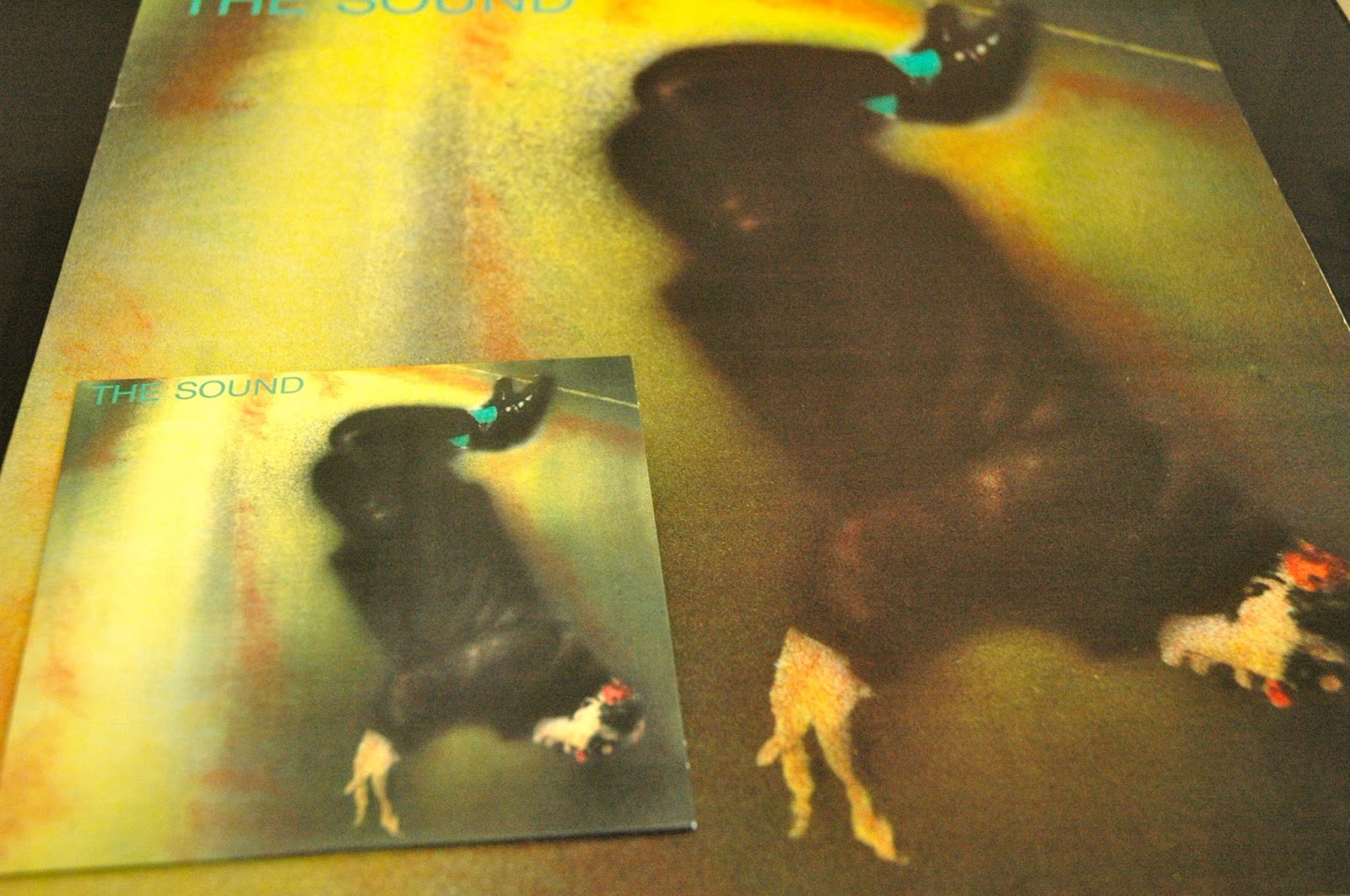
Demon Records – DEMREC97
2 × vinyles, 10", 33 ⅓ rpm
18 avril 2015
 |
| REN CD 3 - 1999 |
A l'origine sorti en CD en 1999 (le 26 avril, jour du suicide d'Adrian Borland) par le label Renascent, Propaganda fut édité à l'occasion du Record Store Day pour la première fois en vinyle, dans un format 2x10".
Ces maquettes, enregistrées dans la maison familiale par Bob, le père d'Adrian, ont capté l'énergie d'un groupe en devenir entre mai et juillet 1979. En gros, cela couvre une période pendant laquelle le quatuor de la banlieue de Londres se nommait encore the Outsiders. Certains titres (*) seront réutilisés pour leur premier album officiel, Jeopardy, dans des versions différentes. Les influences des musiciens vont ici des Stooges à Roxy Music, en passant par le MC5. Par moments, le phrasé d'Adrian est proche de celui de Iggy Pop, en bien plus introverti. Et les étranges cuivres (clarinette/saxo) peuvent faire penser au premier album de Roxy Music. Ces influences, pour la plupart issues du punk-rock US, étaient déjà bien présentes dans les deux albums des Outsiders, mais les compos d'Adrian sont ici plus personnelles, car on y entend désormais plus de subtilités et certains des thèmes qui étaient chers à cet artiste sensible, comme les (parfois difficiles) relations humaines, l'anti-militarisme, une société changeante et déstabilisante.
Certains titres auraient même mérités de figurer sur des albums futurs, notamment le prometteur "Statik".
Par la suite, The Sound, gagnera en maturité, aura intégré ses influences, aura trouvé son propre style musical. Tenant compte du fait que ces jeunes gens jouaient ensemble depuis peu, la plupart de ces 12 titres montrent déjà de l'assurance, une qualité artistique, et un certain professionnalisme.
Tout fan hardcore du groupe se doit d'en posséder une copie !
 |
| back cover |
 |
| Inner sleeves front |
 |
| Inner sleeves back |
 |
| Face D |
A1
|
No Salvation
|
|
A2
|
Deep Breath
|
|
A3
|
Cost Of Living
|
|
B1
|
Quarter Past Two
|
|
B2
|
Night Vs. Day *
|
|
B3
|
Physical World
|
|
C1
|
Statik
|
|
C2
|
Music Business
|
|
C3
|
Propaganda
|
|
D1
|
Words Fail Me *
|
|
D2
|
One More Escape
|
|
D3
|
Missiles *
|
|
/// Versions ///
| Propaganda (CD, Album)
|
|
|
|
Propaganda (2x10", Album)
|
|
|
|
Propaganda (LP, Album, RE, 180)
|
Released
in 1999 by Renascent, Propaganda gathers 12 formative recordings that
were laid down by the Sound in 1979, some of which would be re-tooled
for official release later on. Technically speaking, it covers a period
during which a band called the Outsiders -- who put out the first
self-released punk LP in Britain in mid-1977 -- underwent some lineup
changes and officially changed into a new band, with guitarist/singer
Adrian Borland and bassist Graham Bailey carrying over from the initial
band. The material found here was recorded in the Borland family home
with Adrian's father, Bob, performing the engineering duties from a
small room nearby. Borland and company's influences are apparent: the
Stooges, MC5, and Roxy Music. Borland's vocal phrasing resembles Iggy
Pop's streetwise cool in a more-than-apparent way, though his
worlds-apart personality is introverted and restrained compared to Pop's
unbridled exhibitionism.
The presence of clarinet blurts is an
obvious reference to early Roxy Music, and some of the careening,
assaultive guitar licks from Borland himself resemble the unholy squall
and torrential bomber FX channeling of MC5's Fred Smith and Wayne
Kramer. Down the road, the Sound would become much better at
incorporating their influences, blending and almost burying them.
Regardless, this is just a rawer version of a Radio Birdman record with a
little more stylistic range and more thoughtful lyrics (they are far
from being an endless splatter of grunts and scratches), without the
crazy pose; despite the fact that these people were just getting used to
playing with each other, most everything sounds assured, tight, and
nearly professional. What these songs suffer from in derivation is
equaled in skill, quality, and enthusiasm. Any hardcore fan needs a
copy. It's not for nothing that the bandmembers themselves regard this
collection as their first true record. - See more at:
http://www.brittleheaven.com/articles/the-sound-propaganda-review-all-music-guide/23.html#sthash.vaW76Nxm.dpuf
THE SOUND - Propaganda
(Renascent)
Released
in 1999 by Renascent, Propaganda gathers 12 formative recordings that
were laid down by the Sound in 1979, some of which would be re-tooled
for official release later on. Technically speaking, it covers a period
during which a band called the Outsiders -- who put out the first
self-released punk LP in Britain in mid-1977 -- underwent some lineup
changes and officially changed into a new band, with guitarist/singer
Adrian Borland and bassist Graham Bailey carrying over from the initial
band. The material found here was recorded in the Borland family home
with Adrian's father, Bob, performing the engineering duties from a
small room nearby. Borland and company's influences are apparent: the
Stooges, MC5, and Roxy Music. Borland's vocal phrasing resembles Iggy
Pop's streetwise cool in a more-than-apparent way, though his
worlds-apart personality is introverted and restrained compared to Pop's
unbridled exhibitionism.
The presence of clarinet blurts is an
obvious reference to early Roxy Music, and some of the careening,
assaultive guitar licks from Borland himself resemble the unholy squall
and torrential bomber FX channeling of MC5's Fred Smith and Wayne
Kramer. Down the road, the Sound would become much better at
incorporating their influences, blending and almost burying them.
Regardless, this is just a rawer version of a Radio Birdman record with a
little more stylistic range and more thoughtful lyrics (they are far
from being an endless splatter of grunts and scratches), without the
crazy pose; despite the fact that these people were just getting used to
playing with each other, most everything sounds assured, tight, and
nearly professional. What these songs suffer from in derivation is
equaled in skill, quality, and enthusiasm. Any hardcore fan needs a
copy. It's not for nothing that the bandmembers themselves regard this
collection as their first true record. - See more at:
http://www.brittleheaven.com/articles/the-sound-propaganda-review-all-music-guide/23.html#sthash.8toRNVkF.dpuf